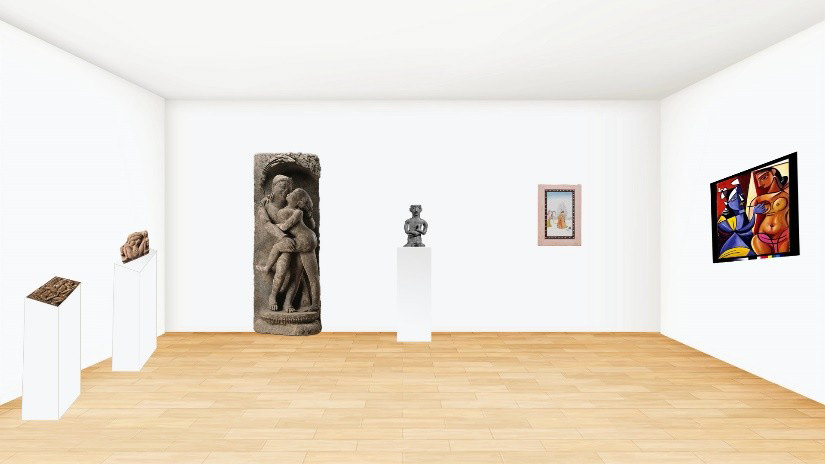
A mock-up exhibition room created in Photoshop. Disclaimer: images are somewhat proportional to size but not exact and are just general representations of order and space.
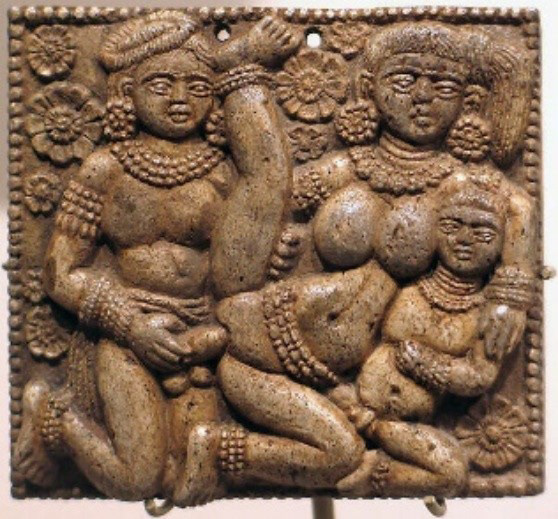
Plaque with Erotic Scene, bone sculpture, India, 1st century BCE, 2 1/6” height 2 ¼” W: Bone carving is a historic tradition in making art in India. Created during the Shunga period, the figures are engaged in intercourse. While being fairly small, the sculpture exhibits remarkable craftsmanship. This work was gifted to the Metropolitan Museum of Art by the Randall & Kathryn Smith Foundation.
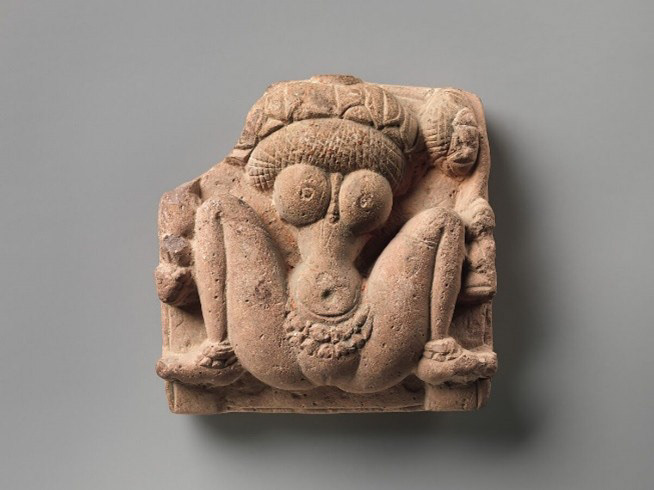
Lotus-Headed Fertility Goddess Lajja Gauri, sandstone sculpture India (Madhya Pradesh) ca. 6th century, H. 4 1/16 in.: Subject Lajja Gauri is shown in position implying she is giving birth, but pregnancy is not pictured, implying the sculpture has more sexual context. The rare miniature sculpture was discovered in the Seoni district of Madhya Pradesh, central India, and is from the Samuel Eilenberg collection but was featured in 3 of the Metropolitan Museum of Art’s collections, including “The Lotus: Transcendant: Indian and Southeast Asian Art from the Samuel Eilenberg Collection,” “The Pala-Sena Period,” and the “Mother India: The Goddess in Indian Painting.”
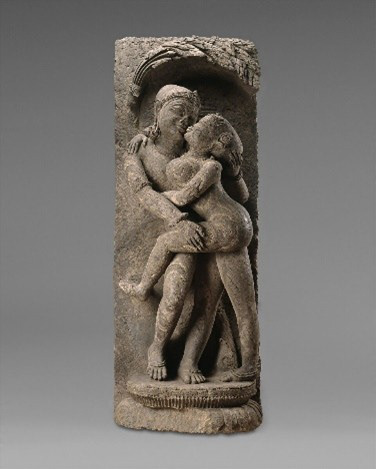
Loving Couple, ferruginous stone sculpture (Mithuna) India (Orissa) 13th century, 72” height: Bejeweled couple referred to as a mithuna erotically posed embraces each other while gazing longingly into each other’s eyes. Once a secondary decoration of a temple front, their bodies are stylistically characterized by architectural sculptures of the 13th century in northeast India. Displayed in the Metropolitan Museum of Art’s “Masterpieces of the Art of India from the Museum’s Collections.”
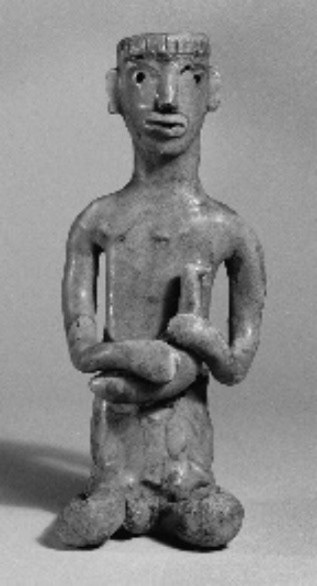
Nude Man Holding Cock, earthenware ceramic, Thailand 14th-15th century, 7 ¼” height, 3 ” width, 3 ” diameter: This piece is from the Rogers Fund, 1966. The sculpture depicts a nude male figure that emphasizes sensuality of the human form, reflecting cultural attitudes surrounding sexuality and eroticism at the time.
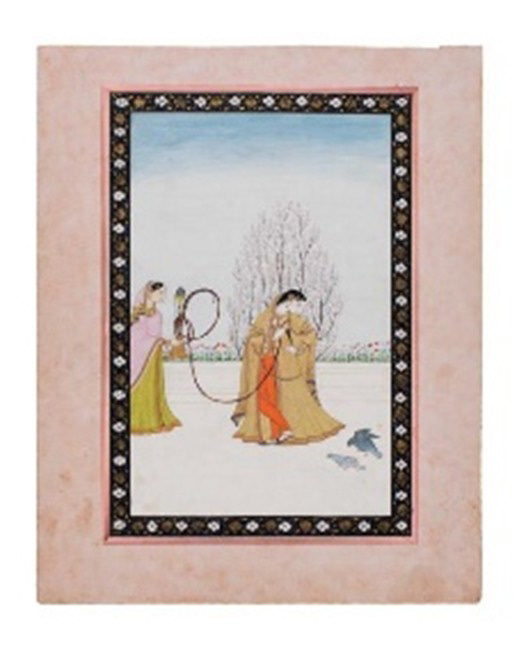
Illustration from a Nayika series, gouache with gold on paper, India c. 1820, H: 7 7/8 in. (20 cm); W: 10 in. (25.3 cm): The miniature with pale colors and delicate floral motifs depicts a woman seeking diversion from hookah while she mourns the absence of her lover. The work was created during the reign of Raja Sansar Chand of Kangra, and was gifted to the Toledo Museum of Art by Ann and Edward Searles
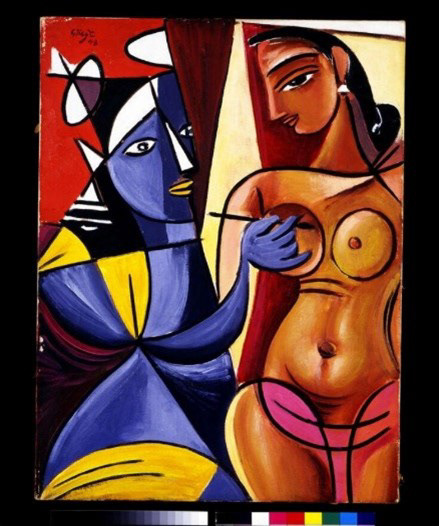
Krishna Painting Radna, by George Keyt, oil on canvas, Sri Lanka, 1948, 60 cm height, 45 cm width: The painting depicts Radha’s figure being painted by Krishna, two divine Hindu subjects that are representative of divine love. The piece was given to the Victoria and Albert Museum in South Kensington, London, by Mr. Victor Sassoon. The artist is considered one of the most significant Sri Lankan poets and commits to revitalizing Indian art and culture within the work.